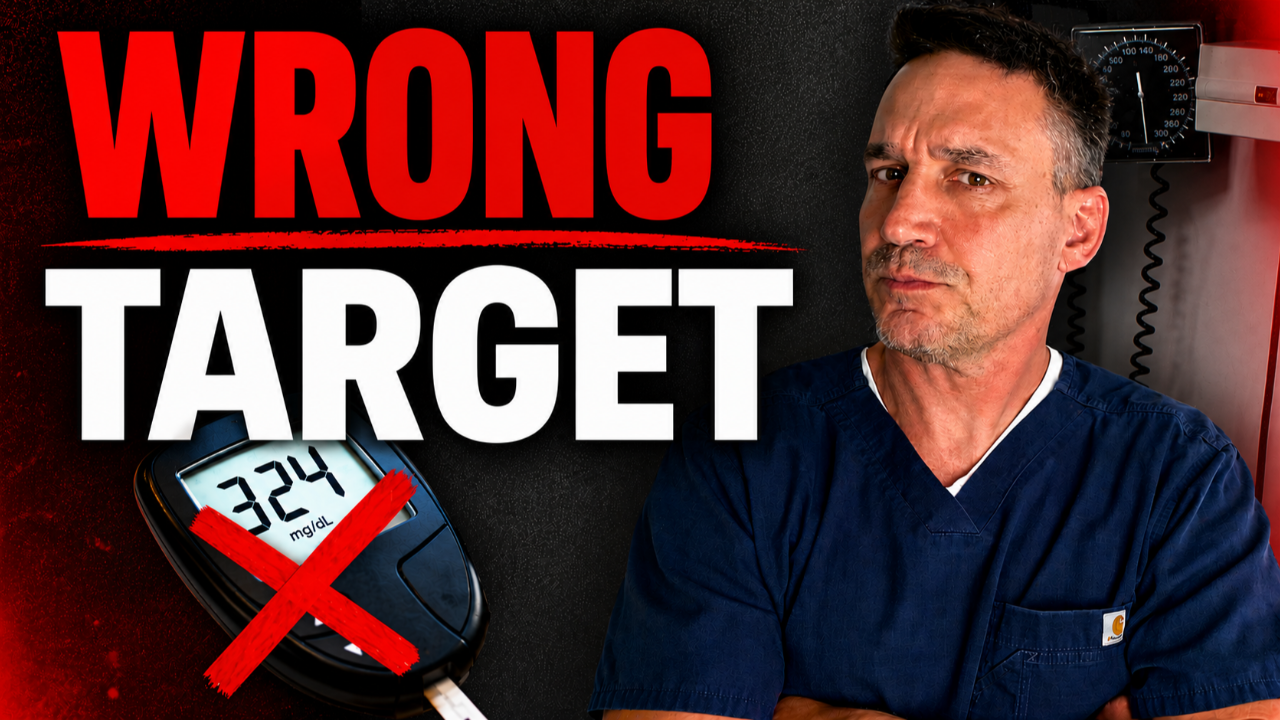
The System Wasn't Designed to Heal You

I sat down for my yearly physical expecting nothing. Routine. I was relatively fit, ate reasonably well, ran a full cardiac and metabolic panel in my head before the doctor even walked in — the way you do when you've spent your career reading other people's labs.
He walked in, sat down, and stared at his computer screen. He glanced my way just long enough to say it.
"You're diabetic. My nurse will teach you to inject insulin."
I said, "Wait — what? Can't I eat better? Move more? Give me a chance, doc."
He told me, matter-of-factly, that it didn't matter what I did. I would need to take the medications. He wrote three prescriptions, told me to come back in ninety days to see if we could hold off on insulin a little longer — but that it was coming. Not a possibility. A certainty. A scheduled decline.
The whole appointment took less time than it takes to read this post.
I've since learned, through my own research and hundreds of conversations with clients, that this was not a bad doctor having a bad day. This was the standard conversation. It is what happens, almost word for word, in exam rooms across this country every single day — to people who, unlike me, don't have fifteen years of critical care experience telling them that "it doesn't matter what you do" is not just discouraging. It's wrong.
Here's what I didn't understand yet, sitting in that chair: this isn't a bad doctor problem. It's a system problem. The average primary care visit gives a physician ten to fifteen minutes of actual conversation — not nearly enough time to build a real nutrition plan, a movement plan, or address sleep and stress as the clinical variables they actually are. The average medical student receives somewhere between nineteen and twenty-four hours of nutrition education across four years of training — less than one percent of total lecture hours. As of 2024, three-quarters of U.S. medical schools require no clinical nutrition course at all, and only 14 percent of residency programs require a nutrition curriculum of any kind. And the way healthcare is financially structured rewards managing a chronic disease for decades far more than it rewards actually reversing one.
None of that is a conspiracy. It's just how the incentives are built. But once you understand it, everything about that appointment — and probably yours too — makes a lot more sense.
I wrote the full story of what happened next — and exactly why that conversation is the standard, not the exception — in a free chapter from my book, The Reversal.